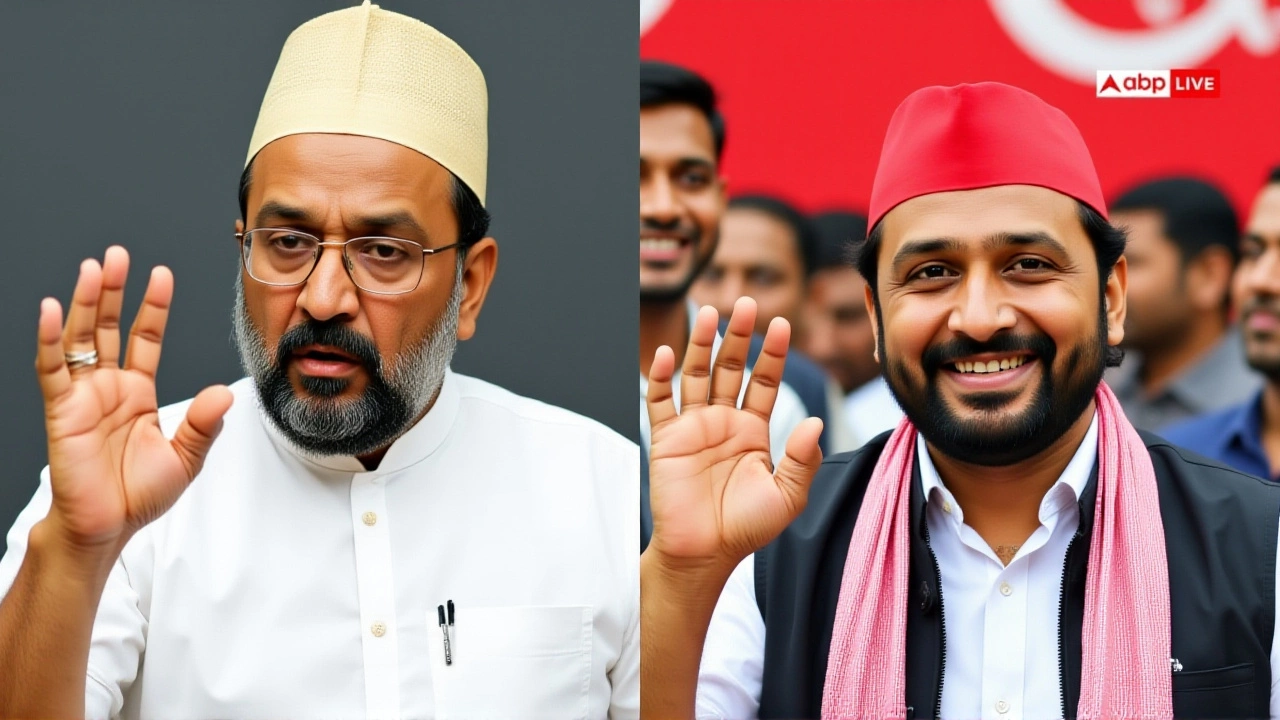
When Asaduddin Owaisi, president of the All India Majlis-e-Ittehadul Muslimeen (AIMIM), announced his party’s formal campaign launch in Bahraich on June 14, he didn’t just bring a crowd—he brought an ultimatum. The message was clear: any political partner willing to help stop the Bharatiya Janata Party (BJP) from returning to power in Uttar Pradesh is welcome at the table. But there’s a catch. The alliance must be built on respect, equality, and a fair share of power—not just handing over seats like spare change.
The stakes couldn’t be higher. With the 2027 Uttar Pradesh Assembly ElectionsUttar Pradesh looming, the opposition is scrambling to form a united front against the ruling BJP. Owaisi’s move signals that AIMIM is no longer content to be a regional player confined to Telangana and parts of Andhra Pradesh. They want a seat at the big table in India’s most politically significant state.
The Bahraich Rally and the Power Play
On that sunny June afternoon in Bahraich, the energy was palpable. Thousands gathered, not just for a speech, but for a declaration of intent. Owaisi addressed the massive turnout with a mix of constitutional rhetoric and hard-nosed political strategy. "If we want to establish leadership in Uttar Pradesh, we need to harness the power of the Constitution," he told the crowd. It wasn’t just empty talk. He followed it up with action, announcing Shaukat Ali, the UP president of AIMIM, as the party’s candidate from the Matera Assembly constituency.
Here’s the twist: Matera is traditionally considered a stronghold of the Samajwadi Party (SP). By fielding a candidate there, Owaisi isn’t just knocking on the door of the opposition; he’s kicking it open. This aggressive stance suggests AIMIM is prepared to contest aggressively, even if it means clashing with potential allies like the SP or the Bahujan Samaj Party (BSP).
Akhilesh Yadav’s Cautious Response
So, how did the other side react? Akhilesh Yadav, the national president of the Samajwadi Party and former Chief Minister of Uttar Pradesh, didn’t exactly roll out the red carpet. In response to Owaisi’s open offer, Yadav offered a characteristically vague warning. "Many such people will come, and obstacles will arise," he said, according to reports from ABP Live.
It’s a diplomatic way of saying, "Not so fast." Political analysts interpreting Yadav’s comments suggest that, much like in Bihar, AIMIM is unlikely to get a full entry into the INDIA bloc’s core alliance structure in Uttar Pradesh. The INDIA bloc, led by the Indian National Congress and various regional parties, has been tight-lipped about expanding its membership further. Yadav’s hesitation reflects a broader unease within the opposition about ceding ground to a party that often operates outside traditional coalition frameworks.
Divided Opposition: Congress vs. SP
The situation gets more complicated when you look at the internal dynamics of the opposition. According to Dainik Jagran, the Congress and the SP hold differing views on whether to include AIMIM in the INDIA bloc. While some factions see Owaisi as a valuable asset capable of splitting the Muslim vote bank away from the BJP, others fear he could become a spoiler, fragmenting the anti-BJP vote further.
This division highlights a critical challenge for the opposition. Rahul Gandhi, the senior leader of the Indian National Congress, has historically maintained a pragmatic approach to alliances, but integrating a party with AIMIM’s distinct ideological stance requires careful negotiation. Meanwhile, Chief Minister Yogi Adityanath watches closely, knowing that any disunity among his opponents only strengthens his position.
What Does This Mean for 2027?
Owaisi’s strategy is bold but risky. By demanding equal partnership and a share of power, he’s setting high barriers for entry. If the major opposition parties refuse, AIMIM might choose to fight alone, relying on its growing organizational strength in western Uttar Pradesh. Alternatively, they could enter into a non-aggression pact, agreeing not to contest each other’s strongholds without a formal power-sharing agreement.
The coming months will be crucial. We’ll likely see more rallies, more announcements, and intense behind-the-scenes negotiations. One thing is certain: the political landscape in Uttar Pradesh is shifting. Owaisi isn’t just playing defense anymore; he’s going on the offensive. Whether this leads to a grand alliance or a fractured opposition remains to be seen, but one thing is clear—the road to 2027 will be anything but smooth.
Frequently Asked Questions
Will AIMIM join the INDIA bloc in Uttar Pradesh?
Currently, it is unlikely. Akhilesh Yadav’s cautious response and the differing views within the Congress and SP suggest that AIMIM may not receive a full entry into the INDIA bloc. Owaisi’s demand for equal power sharing adds another layer of complexity, making a straightforward alliance difficult to achieve before the 2027 elections.
Why is Asaduddin Owaisi focusing on Uttar Pradesh now?
Uttar Pradesh is the most populous state in India and holds the key to national political power. By establishing a strong presence here, AIMIM aims to expand its influence beyond South India. Owaisi sees an opportunity to capitalize on anti-BJP sentiment and position himself as a major national player, leveraging the upcoming 2027 assembly elections to build a lasting base.
What are Owaisi’s conditions for an alliance?
Owaisi has explicitly stated that any alliance must be based on "respect and equality." He refuses to accept a subordinate role where his party merely supports others without gaining political partnership or a fair share of power in the government. This means AIMIM expects significant ministerial portfolios and decision-making authority if they join a coalition.
How does the Samajwadi Party view AIMIM’s entry?
The Samajwadi Party, led by Akhilesh Yadav, appears hesitant. Yadav’s comment about "obstacles" suggests concern that AIMIM’s independent agenda could disrupt the opposition’s unity. Additionally, AIMIM’s decision to field candidates in SP strongholds like Matera indicates potential friction, making a seamless alliance challenging for both parties.
Who is Shaukat Ali and why is his candidacy significant?
Shaukat Ali is the Uttar Pradesh president of AIMIM. His announcement as a candidate from the Matera constituency is significant because Matera is traditionally a Samajwadi Party stronghold. This move signals AIMIM’s aggressive expansion strategy and willingness to challenge established rivals directly, rather than waiting for seat allocations through negotiations.